.png)
A Complete Guide to High-End Painted Kitchen Cabinets

Updated: Aug 20

Let’s clear something up right away.
High-end painted kitchen cabinets are not the same as cabinets that were simply sprayed white in someone’s garage. The difference isn’t just visual, it’s structural, chemical, and architectural.
When done properly, painted cabinetry becomes a furniture-grade surface system. The finish is engineered. It’s layered. It’s cured. It’s built to perform.
And the biggest distinction? It comes down to how they’re finished, and where that finishing happens.
Across the world, two standards dominate luxury cabinetry:
Europe → water-based lacquer
United States → conversion varnish
Understanding these two systems changes how you evaluate kitchen quality entirely.
Furniture-Quality Finishing: What That Actually Means
“Furniture quality” gets thrown around casually. But in cabinetry, it has a very specific meaning.
Furniture-quality painted cabinets are:
Built in controlled factory environments
Spray-finished (never brushed)
Sanded between multiple coats
Chemically cured
Inspected under controlled lighting
Each coat is applied evenly, allowed to flash, sanded smooth, and sealed again. The result? A surface that feels almost liquid to the touch.
You can’t replicate this on-site.
That’s the dividing line between custom luxury cabinetry and standard painted cabinets.

Europe’s Approach: Water-Based Lacquer
In Europe, particularly in Germany and Italy, high-end painted kitchen cabinets are typically finished with water-based lacquer systems.
This approach aligns with strict environmental regulations and a commitment to precision.
Why Europe Prefers Water-Based Lacquer
Low VOC emissions
Cleaner production standards
Extremely refined surface quality
Flexibility that reduces cracking
Water-based lacquer produces a smooth, seamless look that pairs beautifully with European-style cabinets: flat panels, integrated handles, minimal lines.
It’s modern. Architectural. Intentional.
And because it’s sprayed in advanced manufacturing facilities, the finish consistency is nearly flawless.
If you’ve ever seen those sleek Italian kitchens where the cabinets look almost sculpted from a single material, that’s lacquer done properly.

Why Painted Kitchen Cabinets Pair Well with European Style Cabinets
Painted kitchen cabinets naturally complement European-style cabinets because both prioritize precision, simplicity, and surface quality. European cabinetry avoids heavy ornamentation. Instead, it relies on clean geometry, integrated hardware, and seamless planes. A smooth lacquered finish enhances that architectural clarity.
In European-style cabinets, the door profile is often flat or subtly beveled. That simplicity means the finish becomes the star. High-end painted kitchen cabinets, especially those using water-based lacquer, deliver the uniform color and surface refinement that modern European design demands.
Without a flawless finish, European-style cabinets lose their impact. The aesthetic depends on surface perfection. That’s why painted kitchen cabinets and European design are so often paired together in contemporary homes.

The American Standard: Conversion Varnish
In the United States, high-end cabinet makers often rely on conversion varnish.
This finish uses a catalyzed chemical reaction that hardens the coating after application. Think of it as armor for cabinetry.
Why U.S. Manufacturers Use Conversion Varnish
Extremely durable
Excellent moisture resistance
Strong resistance to cleaning chemicals
Ideal for high-traffic households
It may not always have the ultra-gloss depth of lacquer, but it performs exceptionally well in busy kitchens.
If European lacquer leans toward refined elegance, American conversion varnish leans toward resilience.

Lacquer Cabinet vs Conversion Varnish: What’s the Real Difference?
Here’s where things get practical.
Category | European Water-Based Lacquer | U.S. Conversion Varnish |
Environmental Impact | Low VOC | Moderate VOC |
Appearance | Ultra-smooth, modern | Satin to semi-gloss |
Repairability | Easier to touch up | Harder to spot repair |
Durability | Excellent | Extremely high |
Style Pairing | Modern / Contemporary | Transitional / Traditional |
If you’re exploring a lacquer cabinet finish for a minimalist kitchen, European systems shine.
If your home sees heavy daily use, conversion varnish is a powerhouse.
Neither is “better.” They are engineered for different priorities.

High-End Painted Cabinets in the European Kitchen
In a lacquer cabinet kitchen design, the finish isn’t just decoration; it shapes how the space feels.
Gloss lacquer reflects light, making smaller kitchens appear larger. Matte lacquer softens the room and hides fingerprints better.
White remains timeless. Warm taupes feel grounded. Soft grays add architectural calm. Deep navy creates a dramatic contrast on islands.
The finish determines how those colors behave in changing light.
And that’s something most homeowners don’t realize until they see it in person.

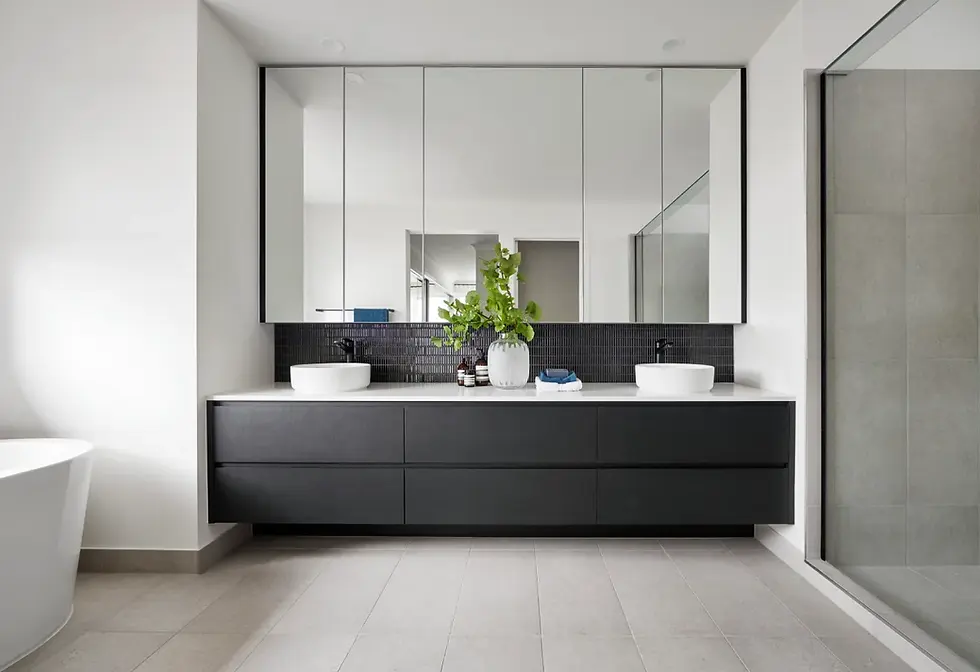
Painted Cabinets in Bathrooms
Bathrooms demand moisture resistance.
Both water-based lacquer and conversion varnish perform well when applied correctly in factory-controlled environments.
High gloss can make a powder room feel brighter. Satin finishes feel softer and more spa-like.
Ventilation matters more than finish type. Even the best coating won’t compensate for poor airflow.
The Pros of High-End Painted Kitchen Cabinets
Exceptionally smooth, refined surfaces
Custom color flexibility
Modern architectural appeal
Strong long-term performance
Higher perceived home value
High-end painted cabinets feel intentional. They look finished from every angle.

The Realistic Cons
Higher cost due to factory finishing
Gloss surfaces show fingerprints
Repair may require professional refinishing
Longer lead times
This isn’t a shortcut option. It’s a commitment to quality.

Alternatives to Lacquer
Lacquer cabinet finishes aren’t the only path.
Here are strong alternatives:
Natural warmth. Visible grain. Less uniform, more organic.
High-Pressure Laminate
Highly durable. Budget-friendly. Less depth in finish.
Acrylic Panels
High gloss without spray finishing. Slightly less repairable.
Basic Painted MDF
Affordable, but lacks the depth and resilience of true factory lacquer or conversion varnish.
Each material makes a statement. The question is whether you want furniture-level refinement or something simpler.
Why Working with a Bay Area Kitchen Designer Matters for Painted Kitchen Cabinets

In regions like Northern California, finish selection isn’t just about style; it’s about environment.
A skilled Bay Area kitchen designer understands how climate, architecture, and real estate standards affect cabinet performance and resale value.
The Bay Area presents unique conditions:
Coastal humidity
Intense natural light
High property valuations
Modern architectural expectations
For example, homes near the coast may experience higher moisture levels. In these environments, finish systems like conversion varnish or properly cured water-based lacquer perform differently depending on ventilation and exposure.
Sunlight is another factor. Large windows, common in Bay Area homes, can intensify UV exposure. A knowledgeable designer evaluates how painted kitchen cabinets will age in bright, open layouts.
But perhaps most important is resale perception.
In competitive real estate markets, buyers notice surface quality. Subtle details like smoothness, sheen consistency and edge durability influence perceived craftsmanship. Furniture-quality finishes often stand out during showings, even if buyers can’t articulate why.
A local designer doesn’t just choose a color. They evaluate finish systems in context.
That context matters.
Maintenance Tips for Painted Kitchen Cabinets
Proper maintenance plays a major role in preserving the smooth finish and durability of painted kitchen cabinets. Whether your cabinets are finished in water-based lacquer or conversion varnish, consistent care helps protect the surface and extend its lifespan.
To keep painted kitchen cabinets looking flawless:
Clean regularly with a soft microfiber cloth to prevent dust buildup that can dull the finish.
Avoid harsh chemicals or abrasive cleaners, which can damage the protective coating.
Wipe spills immediately, especially grease, wine, or acidic liquids that may affect the surface over time.
Use cabinet hardware consistently to minimize fingerprints and natural oils on high-touch areas.
Maintain proper ventilation in kitchens and bathrooms to reduce moisture exposure and prevent finish stress.
With the right care routine, high-quality painted kitchen cabinets can maintain their smooth surface, color integrity, and furniture-grade appearance for decades.
Final Thoughts
High-end painted kitchen cabinets are less about color, and more about chemistry, craftsmanship, and controlled manufacturing.
Europe leads with environmentally conscious water-based lacquer systems that deliver sleek precision.
The United States favors conversion varnish for strength and performance.
Both create furniture-quality cabinetry when done properly.
The real question isn’t “Which is better?”
It’s: What kind of kitchen do you want to live with every day: refined and architectural, or rugged and resilient?
Because when the finish is done right, you don’t just see it.
You feel it.

Frequently Asked Questions
1. Is European water-based lacquer more eco-friendly?
Yes. It produces lower VOC emissions and aligns with strict environmental standards.
2. Is conversion varnish stronger than lacquer?
It is generally more chemically resistant and highly durable for heavy-use kitchens.
3. Do lacquer cabinets scratch easily?
Not easily but high-gloss finishes can show imperfections more clearly.
4. How much do painted kitchen cabinets cost in the Bay Area?
In the Bay Area, professionally finished painted kitchen cabinets typically range from $30,000 to $60,000+, with larger or highly customized projects exceeding that, particularly when guided by an experienced bay area kitchen designer.
5. Are high-end painted cabinets worth the cost?
If longevity, finish quality, and design consistency matter to you - yes.
6. Do these finishes work in humid climates?
Yes, when applied professionally and paired with proper ventilation.
7. How long do high-end painted cabinets last?
With proper care, they can maintain their appearance for decades.


Comments