.png)
Open Shelving vs Kitchen Cabinets

Updated: Aug 20

Open shelving has had a long moment in kitchen design.
You’ve seen it everywhere: pale ceramics stacked perfectly, wood shelves floating against handmade tile, a few sculptural bowls, maybe a trailing plant. In photos, an open shelves kitchen feels relaxed, airy, and effortless.
But real kitchens are not photographs.
They collect coffee mugs, olive oil bottles, cereal bowls, serving platters, mismatched containers, pet hair, dust, and the fine layer of cooking residue that quietly settles on anything left exposed. That is why the open shelving vs kitchen cabinets debate is less about style, and more about how you actually live.
In 2026, designers are not necessarily rejecting open shelving. They are becoming more selective with it. The most successful kitchens today use display with intention, storage with discipline, and cabinetry that creates calm instead of clutter.
Why Open Shelving Kitchens Became So Popular

Open shelving became popular because it instantly changes the feeling of a kitchen.
On Pinterest and Instagram, open shelves helped define the “light and airy” kitchen: bright walls, warm wood, curated ceramics, and everyday pieces styled like decor. It created the impression of more space, even when the actual footprint stayed the same.
That visual openness is a major part of the appeal. Without upper cabinet doors, the kitchen feels less heavy and more breathable. It can make a smaller kitchen feel larger, soften a long wall of cabinetry, and bring a more relaxed rhythm to the room.
People also like open shelving because it feels simple and accessible. A favorite coffee cup, a stack of white plates, or a ceramic bowl is always within reach. Nothing feels hidden. Nothing feels overly formal.
In many ways, open shelving became tied to the idea of minimalism. Not true minimalism, necessarily, but the feeling of living with less, choosing intentionally, and allowing beautiful everyday objects to become part of the design.
The appeal is understandable. Open shelves can soften a kitchen, especially when paired with natural materials like wood, stone, plaster, or handmade tile. They can also break up a long run of cabinetry and add architectural rhythm.
But the question is not whether open shelving looks good. It often does.
The real question is whether it still looks good a year later.
How Open Shelving Matches Different Kitchen Styles

Open shelving is not one-size-fits-all. Its success depends on the kitchen style, shelf material, and how intentionally the shelves are used.
Modern Minimalist Kitchens: Thin floating shelves, monochromatic objects, and minimal visual interruption create a clean architectural look. ARTEZIA’s ultra-thin 12mm (1/2") shelving works especially well in modern European kitchens where lightness and precision matter.
Farmhouse Kitchens: Open shelving adds warmth and nostalgia through everyday dishes, glass jars, and handmade ceramics. The challenge is balance, too many exposed items can quickly feel cluttered instead of charming.
Industrial Kitchens: Shelving paired with metal, concrete, stone, or darker wood complements the raw, utilitarian feel of industrial spaces. The key is restraint and carefully editing what stays visible.
Open shelving is strongest when it has a clear role. It should not be asked to carry the full burden of kitchen storage.
How Kitchen Cabinets Match Different Kitchen Styles

Kitchen cabinets remain the foundation of most successful kitchens because they offer something open shelving cannot: control.
Traditional Kitchens: Framed cabinetry, elegant hardware, and refined finishes create structure, proportion, and a sense of permanence.
Transitional Kitchens: Clean cabinet lines help balance old and new, pairing comfortably with natural stone, warm woods, and softer architectural details.
Luxury Kitchens: Cabinetry becomes part of the architecture itself. Every reveal, grain direction, handle detail, and junction contributes to a more seamless, high-end feel, especially in open-plan homes.
Coastal Kitchens: Light finishes, natural woods, and integrated storage keep the space feeling airy and relaxed while concealing everyday clutter.
This is where cabinetry quietly wins.
The Real Pros of an Open Shelves Kitchen
The best argument for an open shelves kitchen is accessibility. When used intentionally, open shelving offers a few clear advantages:
Immediate access to everyday items, no doors, no extra movement
Plates, bowls, glasses, and coffee mugs are easy to grab and easy to put away
Creates visual lightness, especially in smaller kitchens or areas where upper cabinets may feel too heavy
Works beautifully near windows, around a range wall, or in kitchens where openness matters
Creates an opportunity to display curated pieces like handmade ceramics, cookbooks, or glassware
Makes a kitchen feel more personal, relaxed, and lived-in
Works especially well in low-use kitchens, coffee stations, or styled display areas
Open shelving works best when it is curated, limited, and intentional. It is not a replacement for proper storage, it is a design accent with function.
The Hidden Cons No One Talks About
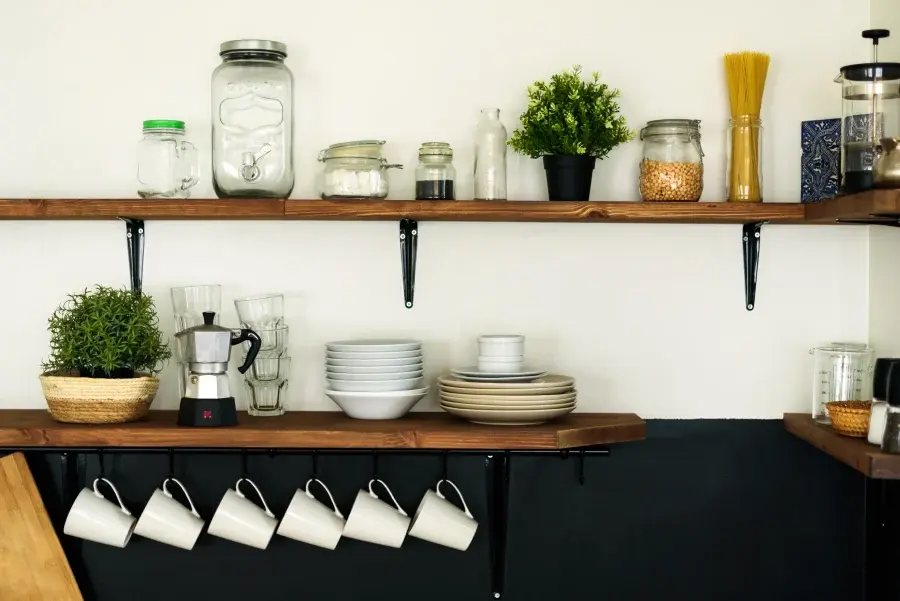
This is where the online dream meets the real kitchen. While open shelving can look beautiful, many homeowners eventually question: is open shelving practical for everyday life?
Some of the biggest drawbacks include:
Constant exposure to dust, grease, steam, and everyday clutter
Tiny particles of cooking oil can settle onto exposed shelves, creating a sticky layer over time
Requires ongoing styling, cleaning, and maintenance to keep the space looking intentional
Visual noise builds quickly, especially when everyday items do not match
Not forgiving, everything is always visible
Kids’ cups, plastic containers, snacks, supplements, and mismatched mugs rarely look curated in real life
With open shelves, every plate, bowl, and glass becomes part of the room’s design
This is why many homeowners love the look at first, then slowly become frustrated with the upkeep.
With cabinets, you can put things away and close the door. With open shelving, the kitchen no longer just has to function, it has to behave visually.
What looks effortless online often requires effort daily.
Kitchen Cabinets, Why They Still Define Modern Kitchens

Kitchen cabinets continue to define modern kitchens because they support the way people actually live.
Concealed storage creates visual calm. It hides clutter, protects dishes from dust and grease, and keeps the kitchen feeling clean from every angle. Cabinets are also more functional for real, everyday cooking, especially for families, frequent entertaining, and homes that need long-term organization.
In open-plan spaces, this becomes even more important. A wall of beautifully finished cabinetry can feel architectural, while integrated appliances and tall storage reduce visual noise and create quiet order.
This is the shift happening in modern kitchen design: from display to integration.
Because the most luxurious kitchens are not always the ones that show the most, but the ones that know what to conceal.
European Cabinet Style, The Quiet Standard in High-End Kitchens

A refined European cabinet style is built around precision, proportion, and integration.
Rather than relying on decorative excess, it focuses on clean lines, thoughtful materials, and seamless function. Handleless cabinetry, integrated appliances, concealed storage, and custom interior organization all contribute to a kitchen that feels composed.
This is where ARTEZIA’s approach becomes especially relevant.
European cabinetry allows the kitchen to feel architectural rather than assembled. Doors align cleanly. Materials transition intentionally. Storage is planned around the homeowner’s rituals, not just the dimensions of the room.
Open shelving can still play a role, but it is treated as a detail, not the main storage strategy.
Shelf thickness also changes the language of the space. A very thin 12mm shelf can feel crisp and modern. A thicker 1-1/2 inch shelf, one of the most common standards, feels more substantial and timeless. Thicker shelves, around 1-1/2 inches and above, can also allow for integrated LED lighting, which adds both beauty and practical task lighting.
This is where shelving becomes elevated. Not just a board on a wall, but a considered design element.
Open Shelving vs Cabinets, Side-by-Side Comparison
Here’s a quick side-by-side comparison designers often use when helping homeowners choose between open shelving and cabinets.
Category | Open Shelving | Kitchen Cabinets |
Aesthetics | Feels light, airy, and expressive | Feels refined, seamless, and architectural |
Visual Impact | Creates openness and display opportunities | Creates visual calm and cleaner sightlines |
Accessibility | Immediate access, no doors | More concealed but highly organized |
Storage Capacity | Limited storage and visibility can feel cluttered quickly | Holds more, hides more, organizes more efficiently |
Maintenance | Requires regular cleaning due to dust and grease buildup | Easier to maintain and keep clean |
Organization | Needs constant styling and editing to look intentional | More forgiving for everyday life |
Best For | Frequently used items, curated displays, low-use kitchens | Busy households, serious cooking, long-term functionality |
Style Longevity | More trend-sensitive | More timeless and adaptable |
Resale Appeal | Can divide buyers depending on lifestyle | Generally viewed as more practical and versatile |
Overall Feel | Relaxed, personal, visually open | Calm, integrated, polished |
Why Not Both? Blending Shelves and Cabinets for the Best of Both Worlds

The most refined solution is often a hybrid kitchen.
Closed cabinets handle the everyday work: dishes, pantry items, cookware, small appliances, cleaning supplies, and everything else that does not need to be seen.
Open shelves are reserved for moments of beauty or convenience.
That might mean a pair of shelves near a coffee station. A display area for ceramics. A lighted shelf above a bar zone. A small architectural break between taller cabinet sections.
Or a single floating shelf that adds warmth to an otherwise seamless wall.
Glass-front cabinets can also offer a smart middle ground. They create the feeling of display while protecting items from dust and grease. For homeowners who like visual openness but want less maintenance, this can be a better long-term choice than fully open shelving.
The goal is not to choose display over storage. The goal is to design the right amount of each.
What Designers Recommend in 2026
In 2026, kitchen design is moving away from fully exposed storage and toward spaces that feel calmer, cleaner, and more integrated into everyday living.
Today, designers typically recommend:
Concealed storage for the majority of everyday kitchen items
Integrated appliances and hidden work zones to reduce visual noise
Open shelving used selectively, not as the primary storage solution
Shelves reserved for daily-use pieces, curated styling, task lighting, or architectural balance
Cabinetry that prioritizes function, cleanliness, durability, and long-term organization
A hybrid approach that blends display and concealment intentionally
The overall shift is clear: from display to integration.
Because the best kitchens in 2026 are not designed just to photograph well, they are designed to live well for years.
When Open Shelving Actually Works

Open shelving works best when it matches the homeowner’s lifestyle and is used intentionally, not excessively.
It tends to work well when:
You are highly organized and prefer a more minimal kitchen
The shelves hold items used daily, helping prevent dust buildup
Open shelving is used in secondary zones like coffee bars, breakfast stations, butler’s pantries, wine areas, or display niches
The goal is to display curated pieces rather than store everything openly
Thin shelves are used for a crisp, modern architectural look
Thicker shelves are used to integrate LED lighting and create a more substantial custom feel
Open shelving works best when it is not trying to be everything. It should support the kitchen, not overwhelm it.
Open Shelves Kitchen With Integrated LED Lighting
One of the most refined ways to elevate an open shelves kitchen is through integrated LED lighting.
When thoughtfully designed, lighting transforms open shelving from simple storage into an architectural feature. It adds warmth, highlights materials and curated objects, and creates a softer atmosphere throughout the kitchen.
Integrated LEDs also improve functionality, especially for coffee stations, prep areas, or subtle task lighting.
To conceal lighting cleanly, shelves typically need to be thicker. At ARTEZIA, ultra-thin 12mm (1/2") shelves create a crisp modern look, while thicker shelves, commonly around 1-1/2" (38mm) or more, allow lighting channels and wiring to disappear seamlessly within the shelf itself.
The result feels intentional, integrated, and distinctly European, where lighting, materials, and cabinetry are designed as one cohesive system.
Final Verdict: Which One Should You Choose?

Choose open shelves kitchen if you love a curated look, use the items often, and are comfortable with regular upkeep.
Choose kitchen cabinets if you want more storage, less maintenance, and a cleaner everyday experience.
Choose a European cabinet style if you want the kitchen to feel seamless, architectural, and designed for long-term living.
For most high-end kitchens, the answer is not open shelving instead of cabinets. It is cabinetry first, with open shelving used sparingly and beautifully.
That is the difference between a kitchen that looks good for a photo and a kitchen that feels good for years.
See How Modern European Cabinetry Balances Beauty and Function

A beautiful kitchen should not ask you to live perfectly.
It should support the way you cook, gather, host, and move through your day. At ARTEZIA, open shelving, custom cabinetry, integrated lighting, and premium European systems are considered together, so the final space feels both elevated and effortless.
Visit the ARTEZIA showroom to experience how refined cabinetry, material thickness, lighting, and European craftsmanship can transform the way your kitchen looks and lives.
Frequently Asked Questions
Is open shelving in kitchens still in style in 2026?
Yes, but it is being used more selectively. Instead of replacing upper cabinets entirely, open shelving is often used as an accent for display, daily-use dishes, coffee areas, or decorative moments.
Are kitchen shelves instead of cabinets practical?
Kitchen shelves instead of cabinets can be practical in small doses, especially for items used every day. However, they require more cleaning and organization than closed cabinets, especially in kitchens where people cook often.
What is European cabinet style?
European cabinet style typically refers to clean, streamlined cabinetry with precise lines, efficient storage, integrated appliances, and often handleless or minimal hardware. It creates a modern, architectural look with strong functionality.
Do open shelves make a kitchen look bigger?
Open shelves can make a kitchen feel lighter and more open because they reduce the visual weight of upper cabinets. However, if they become cluttered, they can make the kitchen feel busier instead of bigger.
What is the best alternative to open shelving?
Glass-front cabinets, lighted display cabinets, appliance garages, and a few carefully placed floating shelves are strong alternatives. They offer visual interest while keeping most storage protected and concealed.


Comments