.png)
Is an Open Kitchen Right for You?

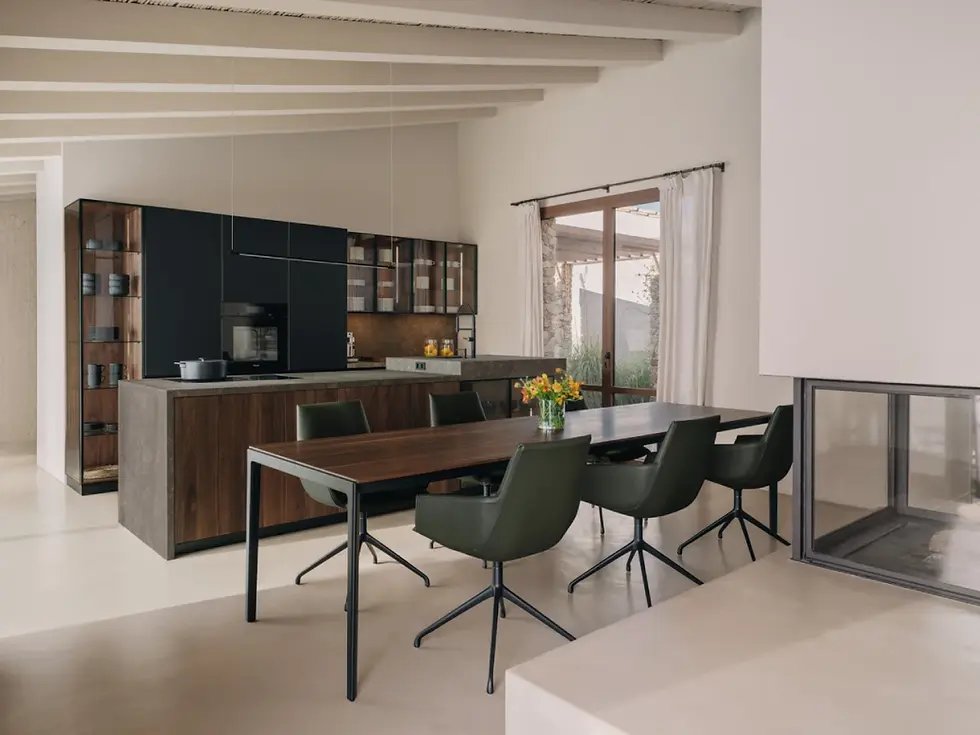
There’s a reason so many renovations begin the same way, removing a wall.
Not just to open up space, but to change how a home feels. The kitchen is no longer a room you step into. It becomes part of everyday life, connected to conversation, light, and movement.
The open kitchen concept has become a defining feature of modern homes. But while it looks effortless, the reality behind it is far more considered.
This guide breaks down what makes an open kitchen work, where it can fall short, and how to design it properly.
Why Open Kitchen Living Has Become the Standard
The kitchen used to be a place you stepped away to. Now, it’s where everything happens.
Dinner prep overlaps with conversation. Kids do homework at the table. Guests gather around the island. The open kitchen and dining area becomes the center of the home, not a separate function.
For many homeowners, this shift feels natural. You’re no longer choosing between cooking and being present, you’re doing both. And that’s the real appeal.

Why Open Kitchen Works
At its best, an open kitchen doesn’t just change the layout, it changes how a home is experienced day to day.
It brings people together, naturally
Cooking is no longer a separate task. You’re still part of the conversation, whether it’s family dinners, casual mornings, or hosting friends. One homeowner described it simply, “I don’t want to feel isolated while I cook, it’s a family event.”
It amplifies light and spatial perception
Without walls interrupting the flow, natural light travels further and more evenly across the space. This doesn’t just make a home brighter; it changes how large it feels. Even compact layouts can feel expansive when sightlines remain open and uninterrupted.
It improves flow and functionality
Movement becomes more intuitive. The transition between cooking, dining, and relaxing feels seamless, which is especially valuable in homes where multiple activities happen at once. For contractors and designers, this often means rethinking circulation paths early in the planning phase.
It supports modern, multi-use living
Today’s homes are no longer used in fixed ways. A single space might function as a kitchen, workspace, entertainment area, and social hub throughout the day. An open layout allows these uses to overlap without friction.
It creates a stronger connection between zones
When materials, proportions, and sightlines align, the kitchen feels integrated, not separate. This is where the space moves beyond function and starts to feel cohesive and lived-in.

Why Open Kitchen Is More Complex Than It Looks
This is the part most people underestimate. Removing a wall doesn’t just open the space, it removes separation, control, and containment. What used to be managed within a single room now affects the entire home.
And this is where real-life experience starts to surface. Homeowners living with an open kitchen living room concept often point to the same challenges:
“If the extraction fan is on, you can’t hear the TV.”
“Cooking grease and fine residue travel further than you expect.”
“All the prep, the mess, the cleanup, it’s always visible.”
“There’s nowhere to step away from the noise.”
These aren’t flaws in the idea of an open kitchen. They’re the result of incomplete planning. Because once everything is connected, every detail carries more weight.
Acoustics become critical
Sound doesn’t stop at a wall anymore. Ventilation systems, dishwashers, conversations, and media all overlap. Without sound-absorbing materials or a thoughtful layout, the space can quickly feel loud and fatiguing.
Ventilation has to work harder
Cooking odors, steam, and grease particles travel freely across zones. A standard extractor is often not enough; high-performance ventilation, proper placement, and even cooking habits start to matter.
Visual discipline becomes part of daily living
What used to be hidden behind a door is now always on display. This increases the need for efficient storage, quick-clean surfaces, and workflows that support staying organized in real time.
Zoning is no longer optional
Without defined areas, the space can feel scattered or overwhelming. Subtle transitions, through layout, lighting, or materials, are what bring clarity back into the space.
Even wall space becomes a design constraint
Fewer walls mean fewer opportunities for storage, shelving, art, or personal expression, something many homeowners only realize after living in the space.
For designers and contractors, this is where the real work begins. An open kitchen living room concept isn’t simpler, it’s more demanding.
Because when everything is visible, everything has to be resolved.
Otherwise, what was meant to feel open and effortless can quickly feel exposed, noisy, and difficult to live with.
How to Create Zoning Without Walls

Zoning is what makes an open space feel intentional. Without it, the room can feel undefined. With it, each area has clarity, purpose, and a natural rhythm, while still feeling connected.
In a well-designed open kitchen living room concept, zoning is about guiding how the space is used, not just how it looks.
Define zones through layout first
Before materials or styling, zoning starts with placement. The kitchen, dining, and living areas should each have a clear position and purpose. A well-placed island, dining table, or seating area establishes natural boundaries without needing walls.
Use the island as a spatial anchor
The kitchen island is often the strongest divider. It marks where cooking happens and creates a natural transition into dining or living zones.
Let furniture shape the space
Sofas, rugs, and dining tables act as subtle boundaries. A sofa facing away from the kitchen, for example, instantly separates the living area while maintaining openness.
Layer lighting to signal function
Lighting helps define how each zone is used. Task lighting over the kitchen, softer ambient lighting in the living area, each creates a different atmosphere within the same space.
Introduce flexible separation when needed
In some homes, full openness isn’t always practical. Glass partitions or sliding panels can offer optional separation for noise, cooking, or privacy, without permanently closing the space.
Use architectural cues to refine transitions
Changes in ceiling height, beams, or subtle floor shifts can signal movement between zones. These details help structure the space without interrupting flow.

Integrating Cabinetry, Shelving, and Living Room Elements
In a traditional layout, the kitchen could stand on its own. In an open kitchen, it becomes part of the entire space. That means cabinetry isn’t just functional, it’s visible from everywhere.
How to Design Cabinetry That Feels Part of the Space
Make cabinetry feel architectural
It should blend into the space, not feel like a separate block. Clean lines and balanced proportions matter more in open layouts.
Use open shelving as a bridge
Open shelving softens the transition into the living area while adding storage and display.
Carry materials across zones
Repeat finishes, like wood tones or textures, to create a sense of cohesion. Not identical but clearly connected.
Extend built-ins beyond the kitchen
Let cabinetry flow into living room storage or media units. This creates continuity and maximizes function.
Balance what you hide and what you show
Closed storage keeps things clean. Select open elements add warmth and personality.
Focus on the details
Handles, edges, and alignment lines become more noticeable in open spaces. Precision is what makes everything feel resolved.
This is where the difference shows. Between a kitchen that feels added in, and one that feels fully integrated.
Concealed Storage, Integrated Appliances, and Clean Lines
One of the biggest realities of an open kitchen: You can’t hide anything.
That’s why the most successful spaces rely on:
Appliance garages to hide everyday clutter
Sliding panels to conceal working areas
Integrated appliances that disappear into cabinetry
Handleless cabinetry removes visual clutter, creating clean, uninterrupted lines across the space
These aren’t luxury add-ons. They’re essential. Because in an open space, visual calm is part of comfort.


The Role of Custom Design and Craftsmanship
Open layouts demand precision. Without walls to hide behind, every line and transition is visible. What works in a closed kitchen often feels unresolved in an open kitchen concept.
This is where custom design matters. The kitchen and living areas are designed as one, not separately. Cabinetry, shelving, and layout align so proportions and sightlines feel consistent. Storage is planned around how you actually live, making it easier to keep the space functional and visually calm.
Materials and finishes carry through with intention, so transitions feel natural, not forced.
This isn’t just about aesthetics. It’s what makes an open space feel balanced, cohesive, and easy to live in.
If you’re exploring this for your own home, it helps to think it through early. A conversation with the design team at ARTEZIA can help clarify what will actually work in your space.
Common Mistakes to Avoid in an Open Kitchen
Even well-designed open kitchens can fall short when key details are overlooked.
Here are the issues that come up most often in real homes:
No clear zoning
Everything blends together, making the space feel undefined and harder to use.
Ignoring noise and acoustics
Extraction fans, dishwashers, and TV compete. Without sound control, the space can feel constantly loud.
Poor ventilation and grease control
Odors and fine grease travel beyond the kitchen. Without proper extraction and materials, buildup becomes noticeable over time.
Too much visual clutter
With everything on display, even small messes feel amplified. Lack of concealed storage quickly makes the space feel busy.
Inconsistent materials
Too many finishes break cohesion. In open layouts, materials need to feel connected.
Wrong scale and proportions
Oversized islands or undersized furniture throw off balance across the entire space.
Limited wall space
Less room for art, shelving, and storage, something many only realize later.
Designing spaces separately
Treating the kitchen and living room as separate projects leads to a disconnected result.
No option for separation
Openness works until you need quiet. Flexible solutions like glass partitions or sliding panels make a big difference.
These are subtle mistakes, but in an open kitchen living room concept, small issues tend to impact the entire space.
Is Open Kitchen Concept Right for You?

It depends less on trends, and more on how you actually live day to day. An open kitchen concept works best when it supports your habits, not just your vision.
It’s a strong fit if you:
Enjoy hosting and being part of the conversation while cooking
Prefer open sightlines and a connected, social space
Are comfortable with the kitchen always being visible, even mid-use
Like a flexible space where multiple activities happen at once
It may not be ideal if you:
Value quiet, focused time while cooking
Prefer to keep mess, noise, and prep out of sight
Need separation between living, working, and relaxing areas
Want a space where you can easily step away from activity
Many homeowners love the openness, until they want a moment of privacy or less noise. Others wouldn’t trade the connection for anything.
There’s no right or wrong choice. Only what feels natural for how you want your home to function.
Curious How an Open Kitchen Would Work in Your Space?

The best open kitchen concepts don’t just look good, they feel right to live in.
If you’re exploring an open kitchen, the real question isn’t whether to open the space, it’s how to make it work for the way you live.
If you’d like to explore what could work for your home, you can book a consultation with the ARTEZIA team, a straightforward way to turn ideas into something clear, practical, and tailored to you.
Frequently Asked Questions
What is an open kitchen living room concept?
An open kitchen living room concept combines the kitchen, dining, and living areas into one continuous space, removing walls to create better flow, light, and interaction.
How to soundproof an open kitchen living room area?
Sound control starts with layering materials. Use soft furnishings like rugs, upholstered seating, and curtains to absorb sound. Acoustic panels or textured wall finishes can help. Choose low-noise appliances, especially dishwashers and ventilation systems. Position the TV and speakers strategically and consider partial partitions or glass dividers to reduce sound travel without closing the space.
How do you reduce cooking smells and grease in an open kitchen?
Invest in a high-quality extraction hood with strong airflow. Cook with lids when possible and maintain regular cleaning routines. Materials also matter, choose surfaces that are easy to wipe and resistant to build up. Zoning, such as placing dining slightly away from the cooking line, can also help.
What is the best layout for an open kitchen and dining area?
A common approach is to use the kitchen island as a central anchor, with the dining area positioned adjacent but slightly offset. This creates flow while maintaining functional separation between cooking and dining.
How do you hide mess in an open kitchen?
Incorporate appliance garages, deep drawers, and integrated cabinetry. Start gatherings with a clean workspace, and load directly into the dishwasher as you go. Smart storage design makes everyday maintenance easier.
Can you have some separation in an open kitchen layout?
Yes, and it’s often recommended. Glass partitions, sliding panels, and open shelving can create flexible boundaries without sacrificing openness.
Is an open kitchen more expensive to build?
It can be. Structural changes, custom cabinetry, and higher design coordination often increase costs, but they also significantly impact the final result.
Are open kitchens still a good investment?
Yes, when designed well. They remain highly desirable, but the quality of execution matters more than the concept itself.
What are the biggest downsides of an open kitchen?
Noise, visible clutter, lack of privacy, and maintenance are the most common concerns. These can be addressed through thoughtful design, but they shouldn’t be ignored.


Comments