.png)
Solid Wood vs Wood Veneer: What’s the Real Story?

Updated: Aug 20

In high-end kitchens and bespoke interiors, materials are never just technical decisions. They are a philosophy, a statement of intent, and a promise about how a space will feel for decades to come.
When planning a kitchen, wardrobe, or bespoke furniture, one question always comes up: solid wood vs veneer – which is better? One is often seen as authentic and timeless, the other as a compromise. In reality, the truth is far more nuanced and far more interesting.
At ARTEZIA, we design kitchens through the lens of material integrity and timeless performance. From the quiet precision of slab doors to the heritage of frame construction, every decision is intentional. Brands like TEAM 7 exemplify this philosophy, redefining what solid wood can achieve when craftsmanship and engineering work in harmony.
This conversation has never been about cheap versus expensive. It is about choosing the right material, thoughtfully designed to perform, not just today, but for decades to come.

The Big Misconception: Does Solid Wood Always Mean Better?
There is a long-held belief that hardwood solid furniture is inherently superior and that veneer exists merely as a cost-cutting alternative. That idea, however, belongs to another era.
In contemporary kitchen design, quality is no longer defined by whether a material is solid or layered, but by how intelligently it is used. Veneer, when executed at a high level, is not a shortcut; it is a deliberate design choice. Likewise, solid wood, when engineered with precision, becomes a modern luxury rather than a structural risk.
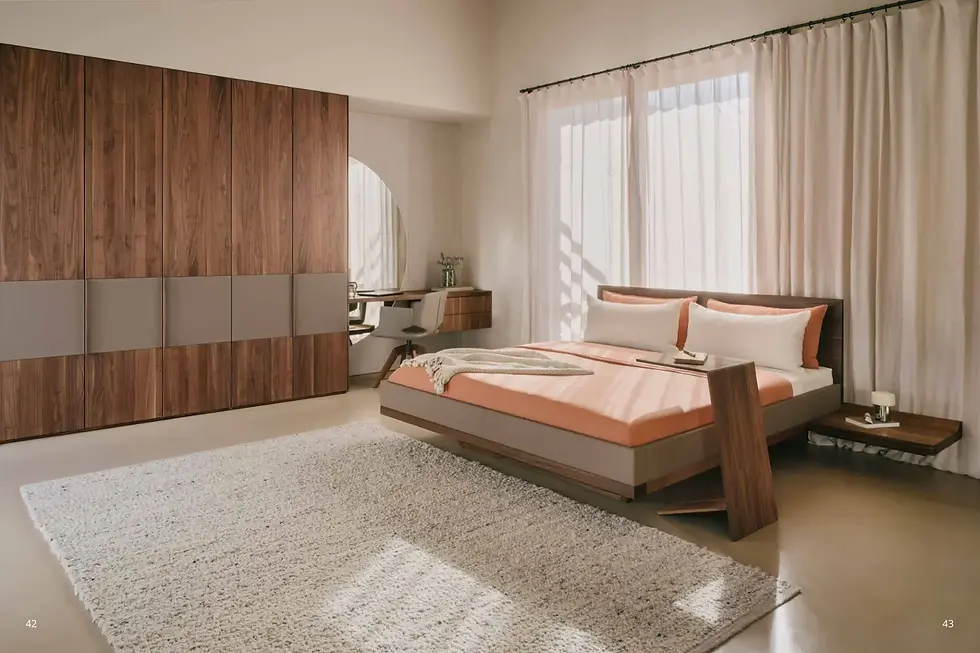
In fact, high-quality veneer often outperforms solid wood in large, flat applications such as:
Cabinet doors
Tall panels
Drawer fronts
Wardrobes
The reason is simple: wood is a living material. It responds to humidity, temperature, and time. And how material behaves over the years of daily use matters just as much as it looks on day one.

What Are Wood Veneers?
A common question we hear is: is veneer real wood?
The answer: Yes - absolutely.
Wood veneer is a thin slice of real hardwood, carefully selected and applied to a stable core such as plywood or engineered panels. It is not laminate. It is not imitation. It is wood, refined.
Why Designers Choose Veneer
In large, flat applications such as cabinet doors, tall pantry panels, and drawer fronts, veneers offer something solid wood cannot easily guarantee:
Exceptional dimensional stability
Consistent grain flow across wide surfaces
Reduced risk of warping or bowing
Responsible use of precious hardwoods
This is why wood veneer cabinets dominate high-end European kitchens. Not because they are cheaper, but because they are smarter.
Solid Wood Furniture: The Beauty of Hardwood Solids
Solid wood furniture is crafted entirely from natural timber, no cores, no layers.
Its grain is deeper. Its touch is warmer. Its ageing tells a story rather than showing wear.

Advantages of Solid Wood
Exceptional durability
Can be sanded, refinished, and repaired
Ages beautifully with character and patina
Every piece is completely unique
Solid wood is at its best where the human hand meets the surface. That’s why hardwood solids are ideal for:
Tabletops
Chairs and benches
Frames and structural elements
High-impact surfaces

The Reality of Solid Wood Movement
Wood is a living material. It responds quietly and constantly to its environment. Changes in humidity, temperature, and atmospheric pressure all influence how it behaves over time.
This natural movement is not a flaw; it is part of the wood’s character. However, when solid wood is not engineered with precision, those subtle shifts can become visible, resulting in bowing, surface cracking, or doors that fall out of alignment.
At the highest level of kitchen and furniture design, engineering and craftsmanship matter more than the material itself. It is this invisible expertise in how the wood is constructed, layered, and allowed to move that ultimately determines whether a piece will age gracefully or struggle against its own nature.

Slab Doors vs Frame Doors
Frame doors are forgiving. Their construction naturally accommodates wood movement, making solid wood a traditional and reliable choice.
Slab Doors (Flat Panel Doors), however, are a different story.
Slab doors are:
Modern
Minimal
Clean lined
Large, uninterrupted surfaces
Because of their size, solid wood slab doors are technically challenging.
This is where most manufacturers step back from solid wood and rely on veneer adhered to engineered cores.
TEAM 7 has a different approach.

TEAM 7: Redefining Solid Wood Slab Doors
In a world where most manufacturers step back from solid wood, TEAM 7 steps forward.
Where others compromise, turning to veneers or engineered substitutes, TEAM 7 quietly does what few are willing to attempt: true solid wood slab doors, executed without concession.
The question is not whether it can be done. It is how it is done and how it continues to perform with absolute precision over time.
The answer lies in TEAM 7’s three-layer solid wood technology: an intelligent construction that preserves the authenticity of solid wood while delivering the stability modern slab design demands.

TEAM 7’s 3-Layer Solid Wood Technology Explained
Rather than relying on a single, monolithic plank, TEAM 7 approaches solid wood with remarkable intelligence.
Each solid wood board is constructed using a three-layer composition, with the grain direction of every layer deliberately offset. This considered structure allows the natural movement of wood to be balanced and controlled, dramatically enhancing stability without diluting authenticity.
The result is a rare achievement in contemporary kitchen design: solid wood slab doors that remain flat, precise, and composed over time, even at generous dimensions.
This technology delivers:
Exceptional resistance to warping
Long-term dimensional stability
A tactile surface that retains the warmth, depth, and character of hardwood solids
Finished exclusively with pure natural oils, the wood remains open-pored and alive to touch, never sealed beneath artificial coatings or plasticized finishes. The grain breathes, the surface matures, and the material ages with quiet elegance.
This is not veneer presented as solid wood. This is solid wood engineered to perform, refined to endure, and elevated to its highest expression.
Solid Wood vs Veneer in High-End Kitchens
Feature | Solid Wood | Wood Veneer |
Material | 100% natural wood | Real wood surface |
Stability | Can move if not engineered | Extremely stable |
Repairability | Easy to refinish | Limited surface repairs |
Sustainability | Uses more raw timber | Highly efficient |
Cost | Higher | More affordable |
Best Use | Slab doors (engineered), frames, tables | Cabinet fronts, tall panels |
High-end kitchens often use both because good design is about balance, not extremes.

Sustainability: Why Veneer Is Not a “Cheap Shortcut”
One of the most persistent misconceptions in kitchen design is that veneer exists to cut corners. In truth, veneer exists to use wood intelligently.
In reality:
Veneer allows one log to produce 10–20x more surface area
It preserves old-growth hardwood forests
It makes premium wood accessible without waste
Brands like TEAM 7 take this further by:
Using sustainably managed European forests
Producing everything in-house
Finishing surfaces with pure natural oils, not plastic coatings

How to Tell Veneer from Solid Wood
How can you tell if a surface is solid wood or veneer? The distinction often lies in subtle details. A trained eye and a thoughtful touch can reveal far more than a label.
Is the end grain visible? If you can see continuous end grain along edges or corners, the piece is most likely solid wood.
Do the grain patterns repeat? Repeated or mirrored grain patterns across large surfaces often indicate veneer, where sheets are carefully matched for visual consistency.
Does the piece feel unexpectedly light? Solid wood has a natural density. If a large door or panel feels very light, it may be veneer over an MDF or engineered core.
Is the surface perfectly flat at a large scale? Large, flawlessly flat doors are typically veneer unless they are expertly engineered solid wood, as seen in advanced constructions such as three-layer solid wood systems.
So… Which Should You Choose?
Here’s the truth experienced designers won’t sugarcoat:
Solid wood is unmatched in its warmth, tactility, and ability to age with character.
Wood veneer excels in stability, sustainability, and visual consistency across large surfaces.
The most successful kitchens and furniture pieces do not choose one over the other; they use both intelligently and intentionally.
And when solid wood is engineered properly, as seen with TEAM 7’s solid wood slab doors and 3-layer technology, you truly get the best of both worlds.
Frequently Asked Questions
Is veneer real wood?
Yes. Veneer is made from real hardwood, sliced thin and bonded to a stable core.
What is oak veneer?
Oak veneer is a thin layer of real oak wood applied to a core panel, offering oak’s look with better stability.
How thick is veneer wood?
Most veneers range from 0.5mm to 1mm thick. Premium veneers can be thicker.
What is wood veneer made of?
A natural hardwood surface bonded to plywood, MDF, or engineered wood panels.
Are wood veneer cabinets durable?
High-quality wood veneer cabinets are extremely durable and often outperform solid wood in large applications.
Book a Design Consultation with ARTEZIA
At ARTEZIA, we design kitchens and interiors where material integrity, craftsmanship, and timeless aesthetics come together seamlessly.
We guide you through every decision thoughtfully, transparently, and without compromise.
Ready to Begin?
Book a private design consultation with ARTEZIA and let’s create a space that feels as refined in ten years as it does on day one.


Comments