.png)
Top 10 European Kitchen Trends to Watch in 2026

Updated: Aug 20

The kitchen trend of 2026 isn’t louder. It’s smarter, warmer, and more intentional.
As we move into 2026, kitchen design is shifting away from short-lived trends and toward spaces built for longevity, daily use, and architectural harmony. The modern European kitchen style continues to lead this evolution, combining clean design with thoughtful function and refined materials.
In high-end homes, particularly across design-forward regions like San Francisco and the Bay Area, kitchens are no longer standalone rooms. They’re integrated living spaces shaped by natural light, smart storage, and custom cabinetry designed around how people actually live, not how kitchens are staged.
Below are the top kitchen trends for 2026, inspired by European kitchen design principles and the realities of modern living.
1. Warm Minimalism Replaces Cold White Kitchens

Strategic Use of Wood
One of the most noticeable shifts in kitchen trends in 2026 is the move away from stark white interiors. In their place, modern kitchens embrace warm minimalism, defined by creamy beiges, soft taupes, greige tones, and natural wood finishes.
Warm wood remains essential in modern kitchen design, but its application in 2026 is far more selective. It’s applied strategically, on islands, base cabinets, or tall storage, to ground the space while allowing stone, glass, and matte finishes to remain understated. This approach creates depth without visual clutter and is a hallmark of European kitchen style.
2. Concealed Kitchens for Cleaner Living Spaces


European kitchens in 2026 are designed to visually disappear when not in use. Integrated appliances, flush cabinet panels, and pocket doors conceal prep areas, coffee stations, and everyday clutter.
This trend is especially popular in open-plan homes, where the kitchen must coexist with living and dining areas. By reducing visual noise, concealed kitchens feel architectural, calm, and intentional.
3. Fluted & Textured Cabinetry Adds Subtle Depth
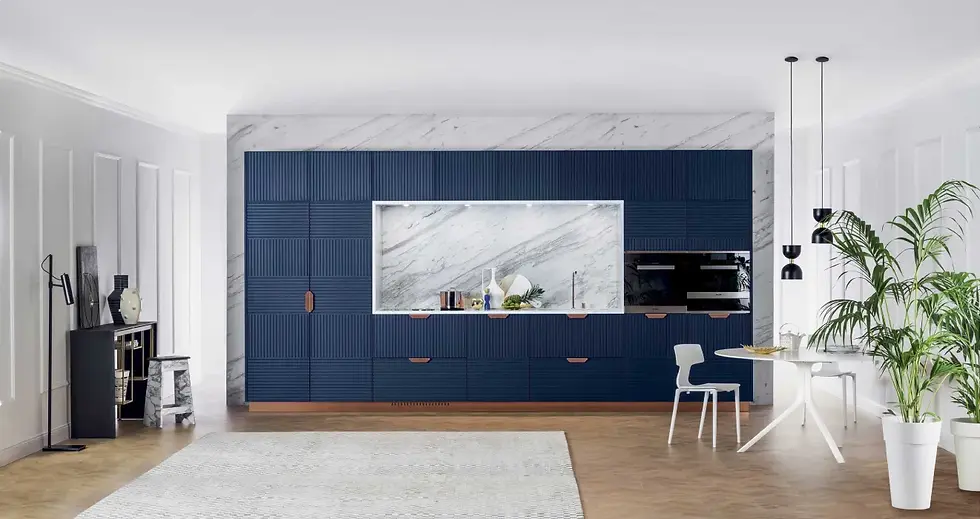
While flat-panel cabinetry isn’t going anywhere in 2026, it’s no longer expected to do all the work on its own. Texture is making a refined return, bringing depth and tactility to modern kitchens without sacrificing the clean lines that define European kitchen style.
Fluted wood fronts, reeded glass panels, and soft vertical grooves introduce a sense of movement that changes throughout the day as light shifts across space. These details add character quietly, allowing cabinetry to feel crafted rather than purely functional.

In modern European kitchens, texture is never decorative for decoration’s sake. Instead, it’s used selectively, often on islands, tall cabinets, or feature storage, to create contrast against smooth stone surfaces, matte lacquers, or concealed appliances. The result is a kitchen that feels layered and intentional, not busy.
More importantly, textured cabinetry brings longevity to modern design. Unlike bold colors or graphic patterns that date quickly, subtle texture ages gracefully, ensuring kitchens feel relevant long after trends come and go. In 2026, it’s proof that restraint is what makes modern kitchens truly timeless.
4. Statement Stone & Islands as Architectural Elements

Kitchen islands are no longer just functional work surfaces; they’re architectural focal points. In 2026, islands feature sculptural forms, thicker stone profiles, and waterfall edges where stone wraps seamlessly down the sides.
Rather than competing with cabinetry, the island anchors the space visually, allowing surrounding elements to remain clean and understated.
5. Smart Storage Over Bigger Kitchens

In 2026, it’s not about having more space; it’s about using space better.
European kitchen style prioritizes function per square foot, making smart storage one of the most important kitchen trends of 2026. This includes:
Drawer-based storage systems
Integrated appliance garages
Pull-out pantries and organizers
Well-designed custom kitchen cabinets allow spaces to feel open, efficient, and uncluttered, even in compact layouts.

6. Curves Are Everywhere

Softness is making a comeback. Curves are being introduced to balance the precision of modern design and make kitchens feel more human, more inviting, and easier to live in.
Expect to see:
Rounded kitchen islands
Arched cabinet details
Curved backsplash edges
These gentle forms soften the overall aesthetic while maintaining the clean, contemporary feel of a European kitchen without feeling cold.

7. Mixed Metals, Used with Restraint

Perfectly matched finishes give way to thoughtful contrast. In 2026, European kitchens incorporate mixed metals to add warmth and character without overwhelming the design.
Popular combinations include brushed brass paired with soft black or aged bronze. The key is restraint, limiting the palette to one or two finishes to maintain cohesion and elegance.
8. Kitchens Designed Around Natural Light

Rather than designing cabinets first and fitting windows around them, modern kitchens in 2026 reverse the process.
Cabinet layouts are planned to frame natural light, skylights, and outdoor views. Full-height cabinetry is carefully positioned to preserve openness, allowing daylight to define the space, especially in homes that prioritize indoor-outdoor living.
9. Task-Zoned Kitchen Layouts for Real Life

Kitchen design in 2026 focuses less on size and more on how space functions. Task-zoned layouts divide the kitchen into dedicated areas for prep, cooking, dining, entertaining, and even working from home.
His zoning improves flow, reduces congestion, and allows multiple activities to happen simultaneously without the space feeling chaotic.
10. Sustainability That Feels Premium

Sustainability is no longer a separate design trend. In 2026, it’s an expectation.
High-end European kitchens are embracing eco-conscious choices that don’t compromise on aesthetics, performance, or longevity.
Rather than short-lived materials or surface-level “green” claims, sustainability is expressed through craftsmanship, responsible sourcing, and long-term durability.
This includes:
Reclaimed or FSC-certified wood
Low-VOC finishes that support healthier indoor environments
Energy-efficient appliances integrated seamlessly into cabinetry
A standout example of this philosophy is TEAM 7, a family-owned Austrian manufacturer renowned for its commitment to true sustainability. TEAM 7 produces solid wood kitchens using timber sourced exclusively from sustainably managed forests, overseeing the entire process from raw material to finished product. Their made-to-order manufacturing approach minimizes waste, reduces emissions, and prioritizes longevity over mass production.
By focusing on CO₂-conscious manufacturing, regional sourcing, and furniture designed to last for decades, TEAM 7 exemplifies how sustainability in European kitchen design has evolved into something more refined, an environmental responsibility that feels premium, intentional, and timeless.
In 2026, the most sustainable kitchens aren’t defined by trends; they’re defined by quality, durability, and thoughtful design choices that stand the test of time.
Why European Kitchen Style Continues to Lead in 2026

The enduring appeal of European kitchen style lies in its balance of beauty and function. Clean-lined custom cabinets, thoughtful layouts, and durable materials create spaces that feel current today and relevant for decades to come.
For homeowners in the San Francisco and the Bay Area, this design philosophy translates into kitchens that support daily life while enhancing long-term home value.

Ready to Design Your European Kitchen?
If you’re considering a kitchen remodel or planning a new home, working with a design team that understands modern European kitchens makes all the difference.
ARTEZIA specializes in thoughtfully designed European kitchens that balance beauty, function, and long-term value. From concept to installation, our team works closely with you to create a kitchen tailored to your home and lifestyle
Book a consultation with ARTEZIA today and start designing a kitchen that blends timeless European design with modern living.
Frequently Asked Questions
Which materials will dominate kitchen interiors in 2026?
Kitchen materials in 2026 focus on tactility, craftsmanship, and durability. Wood appears in a range of tones, from light oak to deeper, richer hues, often paired with softly veined stone and matte finishes. Glass re-emerges as a defining detail in custom cabinetry and partitions, adding lightness and reflection without visual clutter.
When should I start planning a kitchen remodel in the Bay Area?
Most homeowners should begin planning a kitchen remodel 6 to 12 months in advance. This allows time to explore kitchen trends for 2026, refine the layout, and select materials. European and custom cabinetry often require longer lead times, so early planning helps ensure a smoother process and better design outcomes.
How do I choose the right modern kitchen design for my home?
A well-designed kitchen should feel intuitive, functional, and visually cohesive together with the right layout and material choices. Working with a design team experienced in European kitchen design and Bay Area homes helps ensure your kitchen is thoughtfully planned, tailored to your lifestyle, and built to last. Book a consultation with ARTEZIA to explore a modern kitchen design that truly fits your home and the way you live.
Where can I find inspiration for my kitchen renovation in 2026?
The most valuable inspiration for a 2026 kitchen renovation comes from experiencing design in real life. While online images can spark ideas, seeing materials, finishes, and layouts firsthand helps translate trends into a kitchen that truly fits your home and lifestyle.
Exploring a European kitchen showroom allows you to understand how custom cabinetry, natural materials, and thoughtful design come together in practice. Visiting the ARTEZIA showroom in San Francisco offers the opportunity to view premium European kitchens, compare finishes, and speak with experienced designers - a simple way to turn inspiration into a clear design direction.


Excellent insights on where modern European kitchen design is heading. I especially liked the focus on warm minimalism, concealed storage, and textured cabinetry, which balance style with everyday functionality. The ideas shared are both practical and inspiring for homeowners planning renovations. For anyone looking to refresh existing cabinetry without a full remodel, Kitchen Cabinet Wraps Palm Coast can be a smart and cost-effective way to achieve a modern European look while keeping the space elegant and updated.