.png)
The Complete Guide to Custom Cabinetry Lighting Integration

Updated: Aug 20

Lighting That Defines Modern European Elegance
Your kitchen isn’t just a workspace, it’s the heart of your home, where design and functionality meet. Integrated cabinetry lighting has become one of the defining features of Italian and European kitchen cabinets, transforming how we experience light, texture, and space.
From the soft glow beneath wall cabinets to motion-activated drawer lights, this subtle design element turns everyday moments into a curated experience of comfort and sophistication.
At ARTEZIA, we specialize in modern European kitchen design that blends artistry and innovation. In this guide, we’ll explore the most impactful types of integrated lighting, installation ideas, and how TM ITALIA’s advanced systems help elevate your kitchen into a functional and architectural masterpiece.
Why Integrated Lighting Matters
Lighting is more than illumination. It’s design, emotion, and practicality in one. In modern European kitchen cabinets, integrated lighting serves multiple purposes:
Enhances functionality: Perfectly lights up work zones for cooking and prep.
Defines mood: Adjust brightness to create a cozy evening ambiance or crisp daylight tones.
Accentuates design: Highlights fine details like wood grain, finishes, and the clean geometry that defines Italian craftsmanship.
Adds value: Creates a high-end, customized feel associated with luxury kitchens.
At ARTEZIA, we see lighting as part of the design story. Many homeowners ask, “What’s the best way to integrate lighting into European kitchen cabinets?” The answer lies in thoughtful placement and balance, transforming cabinetry into architecture that enhances both mood and function.
1. Underneath Wall Cabinets

The foundation of task lighting.
Under-cabinet lighting is one of the most effective ways to improve both aesthetics and visibility in a modern European kitchen. It provides focused illumination for countertops, ensuring that food prep areas are bright, functional, and visually appealing.
Whether you choose warm or cool white tones, lights for kitchen units and kitchen cabinet LED strips eliminate shadows while enhancing the depth of your design.
Recommended Setup:
Position lights toward the front edge of the cabinet for even coverage.
Use diffused LED channels to hide the light source and create a smooth wash.
Integrate with dimmers for adjustable brightness.

TEAM 7 Inspiration
TEAM 7’s modern cabinetry often features under-cabinet lighting that enhances natural materials like wood and glass. These designs demonstrate how even a simple strip of light can create ambiance and bring warmth to a contemporary space.
2. Inside Cabinets (with Door Sensors)

Light that welcomes you every time you open a door.
Interior cabinet lighting with door sensors adds both luxury and utility. When a cabinet door opens, integrated LEDs automatically illuminate, providing instant visibility, no fumbling in dark spaces.
This feature works beautifully in tall pantry units, display cabinets with glass fronts, or even appliance garages.
Key Advantages:
Improves functionality and ease of access.
Highlights interior finishes and organization systems.
Enhances the crafted interior detailing of high-end kitchen cabinets.
Pro Tip: Choose neutral white LEDs (around 4000K) for true color rendering inside cabinets.
3. Inside Drawers (on Motion or Door Sensors)
Small details, big impact.
Drawer lighting adds convenience and elegance to daily kitchen tasks. Integrated LEDs activate automatically when the drawer opens, creating a refined touch that feels effortless and intentional.
Applications:
Utensil drawers
Cutlery organizers
Deep pan or dish drawers

TM ITALIA’s precision-built drawer systems can be fitted with sensor-activated lighting modules, designed to match their sleek aluminum profiles and seamless joinery. The result: functionality that feels invisible… until you need it.
4. Toe-Kick Lighting
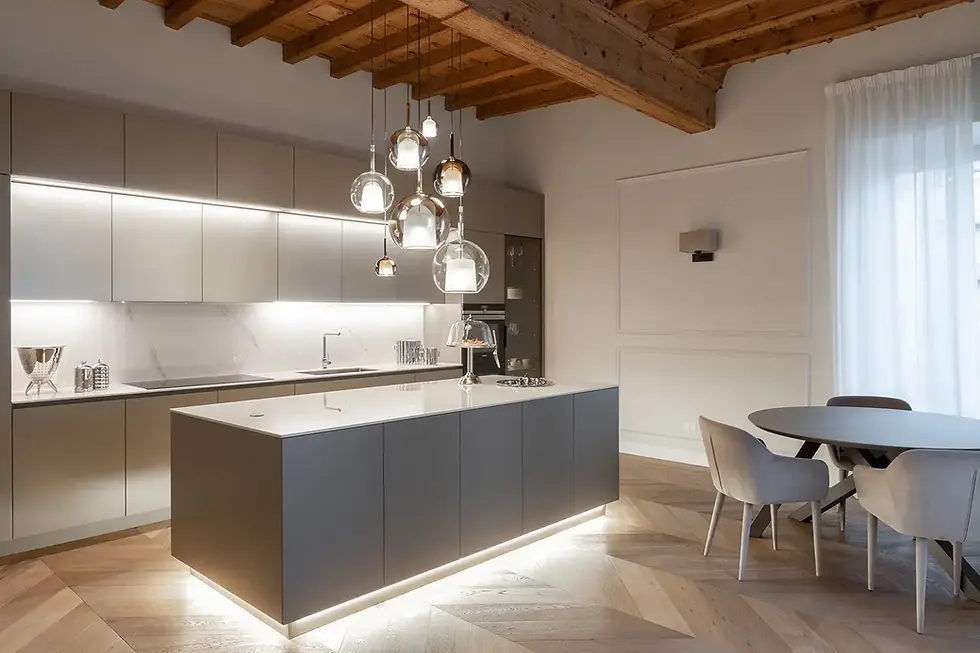
Bring depth and drama to your kitchen.
Toe-kick lighting sometimes referred to as under counter lights for kitchen cabinets adds subtle, ambient illumination along the base of your cabinetry. Ideal for nighttime navigation or to create a floating effect, it enhances both practicality and visual appeal.
When installed with soft dimmable LEDs, toe-kick lighting makes high end kitchen cabinets appear to “float,” adding a touch of architectural sophistication to the space.
Design Tips:
Match color temperature with your lights for kitchen units for a cohesive tone.
Use continuous LED strips with diffusers for a professional finish.
Consider motion sensors for nighttime activation.

This feature pairs beautifully with TM ITALIA’s floating island designs, creating a visually weightless look that blends artistry with technology.
5. Handleless Groove Lighting

Where light meets design innovation.
In modern handleless cabinetry, integrated kitchen lighting has evolved into a design feature of its own. Groove lighting runs along recessed channels, illuminating finger pulls or continuous rails, ideal for modern Italian kitchen concepts that value seamlessness and precision.
Why It Works:
Defines horizontal or vertical cabinet lines.
Serves as both task and ambient lighting.
Groove lighting adds a futuristic, minimalist character, perfect for those who appreciate subtle sophistication.
6. Smart Lighting Integration
Intelligent lighting for intelligent design.
Today’s lights for kitchen cabinets can be connected to smart systems for effortless control. Through mobile apps, voice assistants, or motion sensors, homeowners can dim or change lighting tones instantly.
ARTEZIA recommends pairing kitchen cabinet LED systems with dimmable drivers to balance efficiency and mood, perfect for those designing smart, sustainable homes in the Bay Area cabinetry scene.
Are you wondering how to integrate lighting into your next kitchen remodel? Or searching for design experts who understand both technology and craftsmanship? Our team at ARTEZIA specializes in blending innovation with timeless design to bring your vision to life.

How TM ITALIA Elevates Lighting Integration
TM ITALIA’s design philosophy revolves around bespoke precision. Each kitchen is made-to-order, allowing lighting to be engineered directly into the cabinetry, not added later.
Seamless LED integration in structural panels and grooves
Hidden wiring channels built into cabinet construction
Dimmable smart drivers for personalized lighting control
Sustainable design with energy-efficient components
This isn’t generic illumination, it’s a crafted experience of light, material, and movement, unmistakably Italian and deeply modern.

It’s Not Just for Kitchens
While we are expert kitchen designers, our design approach extends well beyond the kitchen. At ARTEZIA, we create custom cabinetry for the entire home, applying the same thoughtful lighting principles in every space.
Integrated lighting plays an equally important role in living rooms, home offices, bathrooms, wardrobes, and bedroom, where it improves everyday functionality while enhancing the overall atmosphere of the room.
When lighting is considered early and integrated with intention, cabinetry feels more intuitive, more refined, and more connected to how you live.
Good lighting doesn’t belong to a single room.
It belongs to the way a home is experienced.

Final Thoughts
Integrated cabinetry lighting is the quiet design element that defines both the mood and functionality of a modern European kitchen. From under-cabinet task lighting to groove illumination in handleless designs, every light has intention, shaping how the space feels and performs.
From light underneath kitchen cabinets to recessed groove lighting, every detail enhances how the space looks, feels, and performs. In collaboration with TM ITALIA,
ARTEZIA embraces the balance of Italian craftsmanship and modern innovation where light becomes part of the architecture itself.
Are you wondering where to find the best European cabinetry and lighting solutions in the San Francisco Bay Area? Visit ARTEZIA’s showroom and experience firsthand how design and lighting work together to transform a kitchen into an architectural statement.


Comments