.png)
White Oak vs. Walnut Cabinets: Which Wood Is Right for Your Kitchen?

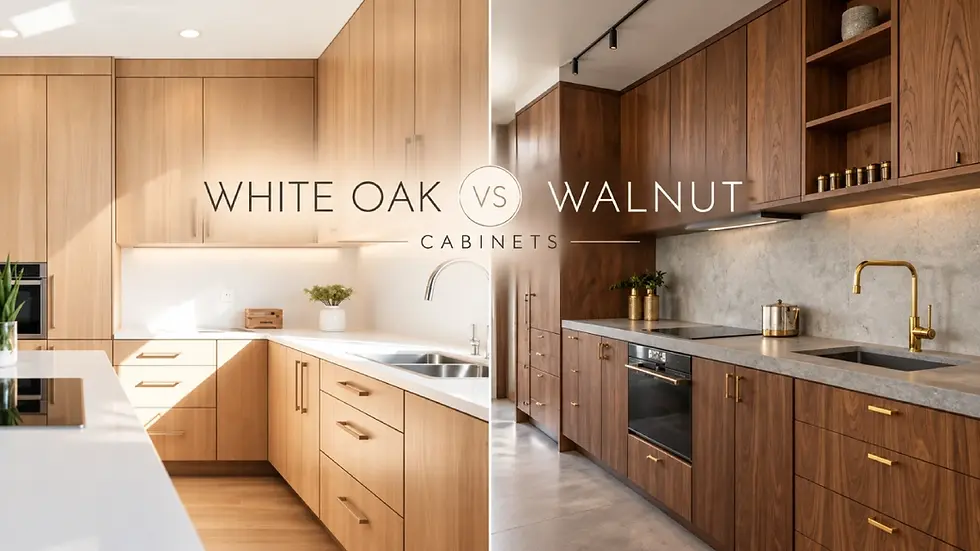
White oak and walnut are two of the most popular woods for contemporary kitchen cabinetry, and for good reason. Both are durable, visually distinctive and versatile enough to work across a wide range of interiors.
But they create very different kitchens.
White oak kitchen cabinets tend to feel lighter, calmer and more architectural. Walnut kitchen cabinets bring deeper color, stronger grain variation and more visual presence.
Here is what to consider before choosing.
White Oak vs. Walnut Cabinets: Side by Side
White Oak | Walnut | |
Color | Pale beige, straw and warm tan | Chocolate brown with warm, reddish or purplish tones |
Grain | Defined, often straight and architectural | Flowing, expressive and varied |
Hardness | Harder and more resistant to dents | Slightly softer and more likely to develop marks over time |
Aging | Usually becomes warmer with age | Often mellows and becomes lighter and warmer |
Overall Feel | Calm, natural and understated | Rich, warm and furniture-like |
Best Light | Works well in bright or lower-light kitchens | Especially effective with generous natural light |
Design Style | Contemporary, Scandinavian, warm minimalism | Contemporary, mid-century, refined, dramatic |
Visual Weight | Lighter and quieter | Deeper and more visually dominant |
White oak is generally the harder of the two woods, which can make it a little more resistant to everyday knocks and dents. Walnut is slightly softer, so it may show signs of use sooner, but that is often part of its appeal, especially in a natural wood kitchen where the surface is expected to develop character over time.
For kitchen cabinetry, though, hardness should not be the deciding factor. The finish, construction quality, and how the cabinets are used will usually matter more than the difference between the two species.
White Oak Cabinets: Light, Calm and Architectural
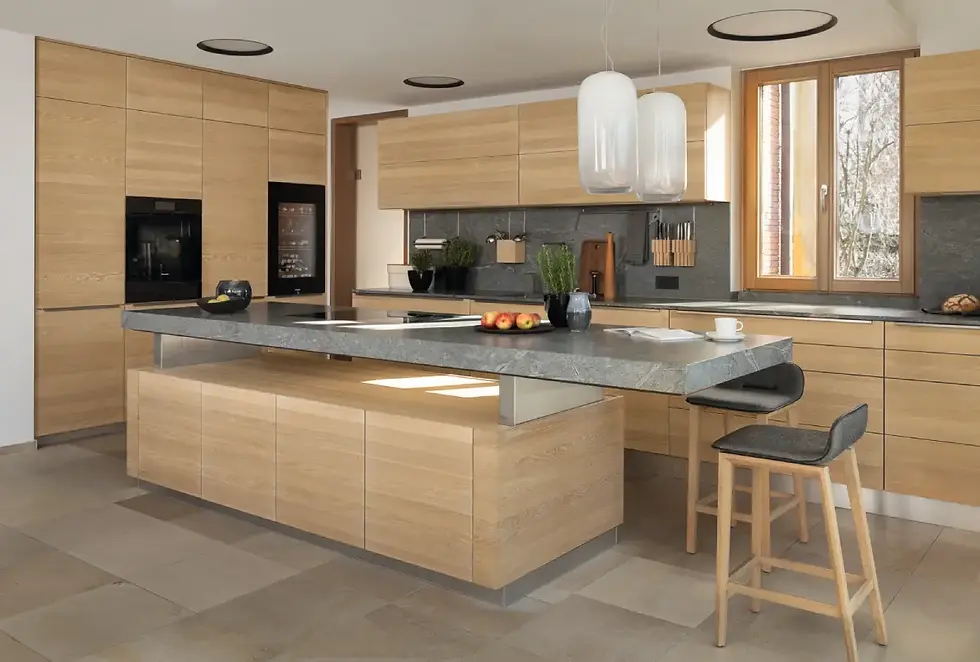
White oak kitchen cabinets work particularly well when the goal is to bring warmth into a kitchen without making the cabinetry feel heavy.
Natural white oak typically sits somewhere between pale beige and warm tan. It has enough grain to keep the cabinetry interesting, but the overall appearance can still remain quiet and restrained.
That makes it especially effective in kitchens with:
large banks of full-height cabinetry
minimal hardware
integrated appliances
stone or plaster surfaces
warm neutrals
black, bronze or stainless-steel accents
White oak also works well when the cabinetry needs to cover a large area without becoming the dominant visual feature.
Instead of competing with a statement countertop, backsplash or architectural view, it can provide a more neutral backdrop.
Why Rift-Sawn White Oak Looks Different
Not all white oak cabinets look the same. One of the biggest differences comes from how the wood is cut.
Rift-sawn white oak is cut in a way that produces a straighter, more consistent grain. The result is cleaner and more linear, which is why it is so often used in contemporary cabinetry.
Other cuts of oak reveal more movement, arches and natural variation.
This is an important distinction because choosing the wood species is only one part of the decision. The cut, grain selection and finish can completely change how the final cabinetry looks.
A rift-sawn white oak kitchen may feel highly architectural, while a more expressive oak selection can feel organic and rustic, even though both are technically the same species.
Walnut Cabinets: Warm, Rich and Furniture-Like

Walnut kitchen cabinets create a very different effect.
Walnut naturally ranges from warm medium brown to deep chocolate, often with darker streaks and subtle variation from board to board. Wild walnut typically shows even more movement, knots and natural character.
Its grain is generally more expressive than rift-cut white oak, which gives walnut cabinetry a richer, more furniture-like presence in the kitchen.
Because of that, walnut has a stronger presence within the room.
It works particularly well on:
kitchen islands
full-height pantry walls
bar cabinetry
large slab-front doors
built-in dining areas
statement cabinetry
Walnut can also make kitchen cabinetry feel closer to custom furniture, particularly when grain direction and panel sequencing are carefully considered.
Which Wood Works Better With Your Kitchen's Light?
Natural light can completely change the way wood cabinetry appears.
Bright, Open Kitchens
In a kitchen with large windows or generous daylight, both white oak and walnut can work very well.
Walnut particularly benefits from natural light because the light reveals its grain and warmer undertones. Instead of reading simply as a dark brown surface, the cabinetry gains depth and variation throughout the day.
White oak in the same environment feels lighter and more understated.
Kitchens With Limited Natural Light
White oak is usually the more forgiving option when daylight is limited.
Its lighter color helps prevent large cabinetry elevations from feeling overly heavy, especially in smaller kitchens or rooms with few windows.
Walnut can still work in a darker room, but the surrounding palette becomes more important. Pale countertops, walls, flooring or strategically placed lighting can help balance it.
Whenever possible, we recommend looking at cabinetry samples inside the actual room rather than choosing entirely under showroom lighting.
Check the sample:
in morning light
in afternoon light
under your planned artificial lighting
next to your actual stone and flooring
Wood can look very different from one environment to another.
How White Oak and Walnut Work With Countertops
Countertops have a major effect on how wood cabinetry reads. Rather than trying to match colors exactly, look at the undertones and the amount of contrast you want.
White Oak Pairs Well With
White oak is highly flexible and works with both quiet and dramatic stone.
Strong combinations include:
warm white quartzite for a soft, natural look
strongly veined marble for a more dramatic focal point
charcoal or black stone for strong contrast
stainless steel or brushed metal for a cleaner, more contemporary look
A lighter countertop keeps the overall kitchen airy.
A black, charcoal or heavily veined surface gives white oak more definition and can push the design in a stronger contemporary direction.
Walnut Pairs Well With
Because walnut already has more visual weight, lighter stone is often a natural complement.
Consider:
warm white quartzite for a soft, elegant contrast
black granite or soapstone for a darker, more dramatic kitchen
light gray concrete or ceramic for a modern, understated contrast
deep green stone for a rich, sophisticated palette
That does not mean walnut needs to be paired with something light.
Dark walnut with dark ceramic or stone can create a much more dramatic kitchen, particularly in a large room with good daylight.
The important part is intentional contrast.
What About Your Flooring?
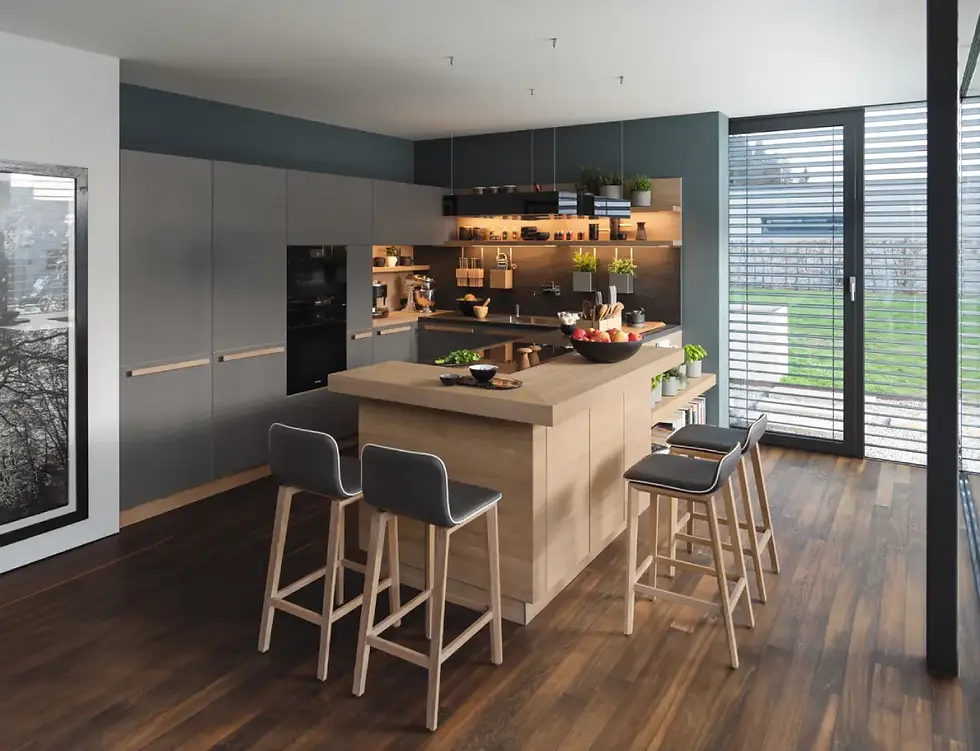
A common mistake is trying to make wood cabinets match the wood floor exactly.
They do not have to.
In many cases, a slight contrast looks more considered than two wood tones that almost match but not quite.
When combining wood flooring with white oak or walnut kitchen cabinets, consider:
whether the undertones are warm or cool
how much contrast exists between the two woods
the direction and scale of the grain
which wood should be visually dominant
whether another material can separate the two
For example, pale oak flooring with walnut cabinetry can create a clear and attractive contrast.
White oak cabinetry with oak flooring can also work, but the tones should feel deliberately related rather than accidentally close.
Sometimes allowing the floor and cabinetry to play different roles produces the better result.
How Much Care Does Each Wood Need?
Both white oak and walnut are practical choices for kitchen cabinetry, but they behave slightly differently over time.
White Oak
White oak is relatively hard and resistant to everyday dents.
Its lighter color and textured grain can also make minor wear less noticeable than it would be on a perfectly smooth, dark surface.
For routine care:
wipe spills promptly
use mild cleaning products appropriate for the finish
avoid abrasive pads
keep excessive moisture away from joints and edges
follow the cabinet manufacturer's recommendations for refinishing or oiling
Walnut
Walnut is softer than white oak, so it can pick up dents and small marks more easily.
That does not necessarily work against it.
Walnut's strong grain variation can allow some wear to blend naturally into the wood over time.
Darker finishes may also show fingerprints, dust, fine scratches, and grease marks more readily, depending on how matte or glossy the surface is.
The bigger consideration is the finish.
An oiled solid-wood cabinet will need different care from a sealed lacquered or factory-finished veneer.
In practice, the finish often matters almost as much as the species when it comes to everyday maintenance.
For more detailed care advice, see our TEAM 7 Furniture Care Guide for practical tips on cleaning, protecting, and maintaining natural solid wood furniture.

How Do White Oak and Walnut Age?
Natural wood does not stay exactly the same color forever.
That is part of its character.
White Oak
White oak will usually become warmer as it ages. A very pale new sample may gradually develop slightly deeper golden or honey tones, depending on the finish and level of sunlight.
Walnut
Walnut tends to behave differently. Fresh walnut can be very dark and rich, but exposure to light can gradually soften the color and move it toward a warmer brown or amber appearance.
TEAM 7 also notes that every piece of natural wood is unique, and that age and environmental factors such as sunlight can change its surface color over time.
This is important when evaluating cabinetry from a small new sample. What you see on installation day is not necessarily the exact color the kitchen will have five years later.
It also means areas that are consistently covered or shaded may initially age differently from those receiving direct light.
Solid Wood, Veneer and Finish Matter Too
Two kitchens using the same wood species can look completely different depending on how the cabinetry is built.
Important variables include:
board selection
grain direction
veneer sequencing
natural variation
oil, stain or lacquer
door thickness
edge construction
matte versus more reflective finishes
Grain matching can be particularly important with walnut because its movement is more noticeable.
When adjacent cabinet doors are carefully selected and sequenced, the grain can continue across multiple panels instead of appearing random.
White oak can benefit from the same level of attention, particularly when the design relies on long, uninterrupted cabinetry elevations.
Choosing the species is only the first design decision.
Beyond Oak vs. Walnut: Designing With Natural Wood
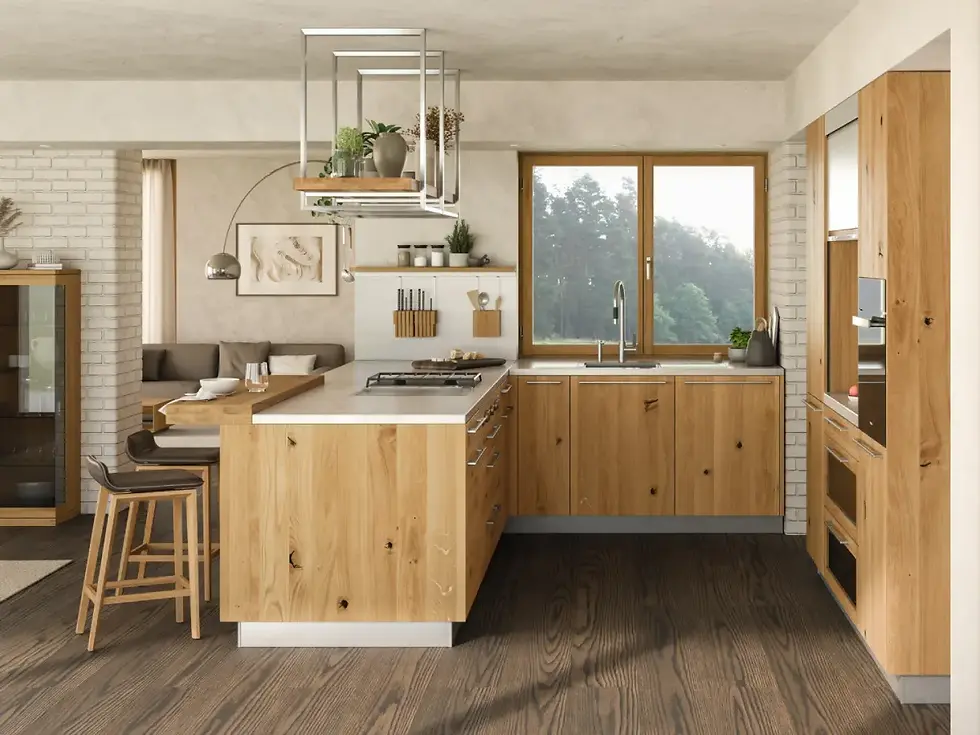
White oak and walnut may dominate the current conversation around natural wood kitchens, but there are far more possibilities.
TEAM 7 is a good example.
Their solid-wood kitchen collections are available in a wide selection of woods, including:
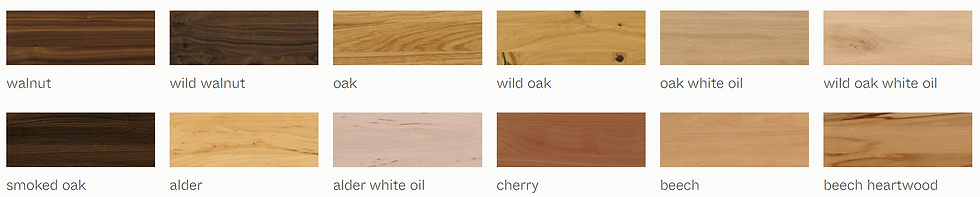
Unless otherwise specified, TEAM 7's wooden surfaces are finished with natural oil.
That range demonstrates how much the character of a kitchen can change even within one manufacturer's material palette.
Oak white oil creates a much lighter expression.
Wild oak and wild walnut introduce more natural variation.
Smoked oak creates greater depth without moving into walnut.
Walnut creates stronger contrast and a richer overall tone.
TEAM 7 also combines natural wood with materials such as ceramic and colored glass.
The linee kitchen, for example, is shown in oak white oil with cement ceramic, while other collections pair wood with darker glass or ceramic surfaces.
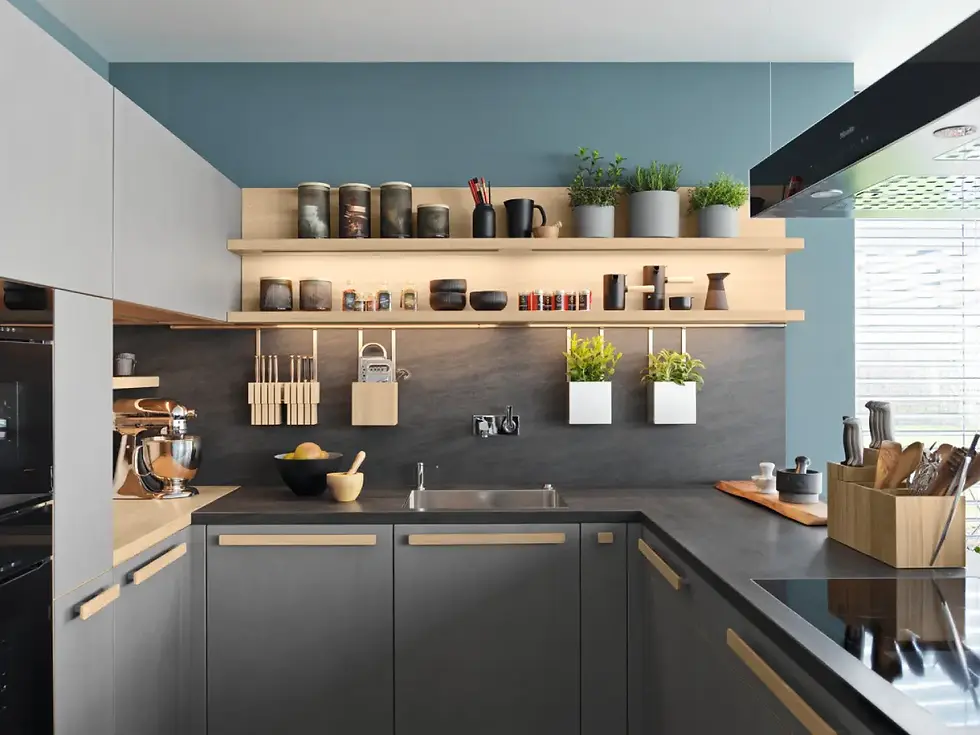
For us, this is the more useful way to think about natural wood cabinetry.
The decision is rarely just "Which wood do we like?"
It is about how that wood works with every other material in the room.
TEAM 7 solid-wood kitchens can be explored through the ARTEZIA TEAM 7 Flagship showroom in San Francisco.
White Oak or Walnut: Which Should You Choose?
There is no universal answer, but the decision becomes easier once you define what you want the cabinetry to do within the room.
Consider White Oak If You Want:
a lighter overall kitchen
subtle visual movement
warm but relatively neutral cabinetry
a Scandinavian or contemporary direction
large areas of wood without too much visual weight
flexibility with stone, metal and other finishes
Consider Walnut If You Want:
richer natural color
more visible wood character
cabinetry with stronger presence
a furniture-like quality
deeper contrast against pale stone and walls
a warmer or more dramatic kitchen
And if you like elements of both, the answer does not necessarily have to be one or the other.
Using natural wood selectively can sometimes produce a stronger kitchen than covering every cabinet in the same species.
Don't Choose From a Sample Alone

The biggest mistake when comparing oak versus walnut is choosing the wood in isolation.
Cabinetry is only one part of the kitchen.
Before making the final decision, look at the wood together with:
backsplash
flooring
wall color
artificial lighting
natural daylight
Even the proportions of the cabinetry matter.
Walnut across a small island creates a completely different impression from walnut covering an entire floor-to-ceiling wall.
The same applies to white oak.
At ARTEZIA, we help homeowners evaluate cabinetry materials as part of the complete kitchen rather than as individual samples. Visit our San Francisco showroom to explore natural wood cabinetry, including TEAM 7 solid-wood kitchens, alongside countertops, finishes and complementary materials.
Frequently Asked Questions
Is white oak or walnut better for kitchen cabinets?
Both are excellent choices. White oak is lighter, harder, and generally more understated, while walnut is darker, warmer, and more visually expressive. The better choice depends on your kitchen’s light, flooring, countertops, and overall design direction.
Are white oak kitchen cabinets durable?
Yes. White oak is a hard, durable wood that holds up well to everyday kitchen use. Its natural grain and lighter tone can also make minor wear less noticeable over time.
Are walnut kitchen cabinets durable?
Yes. Walnut is slightly softer than white oak, but it is still well suited to kitchen cabinetry. With a quality finish and proper care, walnut cabinets can age beautifully and develop a rich natural patina.
Do walnut cabinets make a kitchen look darker?
They can, especially in rooms with limited natural light or when used across large areas of cabinetry. Pairing walnut with lighter countertops, walls, flooring, or integrated lighting can help keep the kitchen balanced.
Do white oak cabinets turn yellow over time?
White oak naturally warms as it ages, especially with exposure to sunlight. The final color change also depends on the finish, oil, and amount of UV exposure.
Does walnut get lighter with age?
Yes. Walnut often becomes slightly lighter and warmer over time as it is exposed to light. This natural aging is part of the character of real wood.
What countertops work best with white oak cabinets?
White oak pairs well with warm white quartzite, creamy stone, marble, and darker countertops for contrast. The most important factor is coordinating the undertones of the wood and stone.
What countertops work best with walnut cabinets?
Walnut works particularly well with cream, ivory, pale quartzite, and warm marble. Darker stone can also create a more dramatic look, especially in a bright, open kitchen.
Is white oak or walnut easier to maintain?
White oak may hide minor wear slightly better because of its lighter color and textured grain. Walnut can show fingerprints or fine marks more readily on darker finishes. In both cases, the cabinet finish and care routine matter more than the wood species alone.
Should I choose solid wood or wood veneer cabinets?
Both can be excellent when properly made. Solid wood offers natural variation and depth, while high-quality veneer can provide more consistent grain across large cabinet fronts. Construction quality, grain selection, and finishing are just as important as the material itself.
Should I choose cabinet wood from a small sample?
Not ideally. Wood should be viewed alongside your countertop, flooring, wall colors, and lighting. Natural wood can look very different depending on the room and the time of day.


Comments